
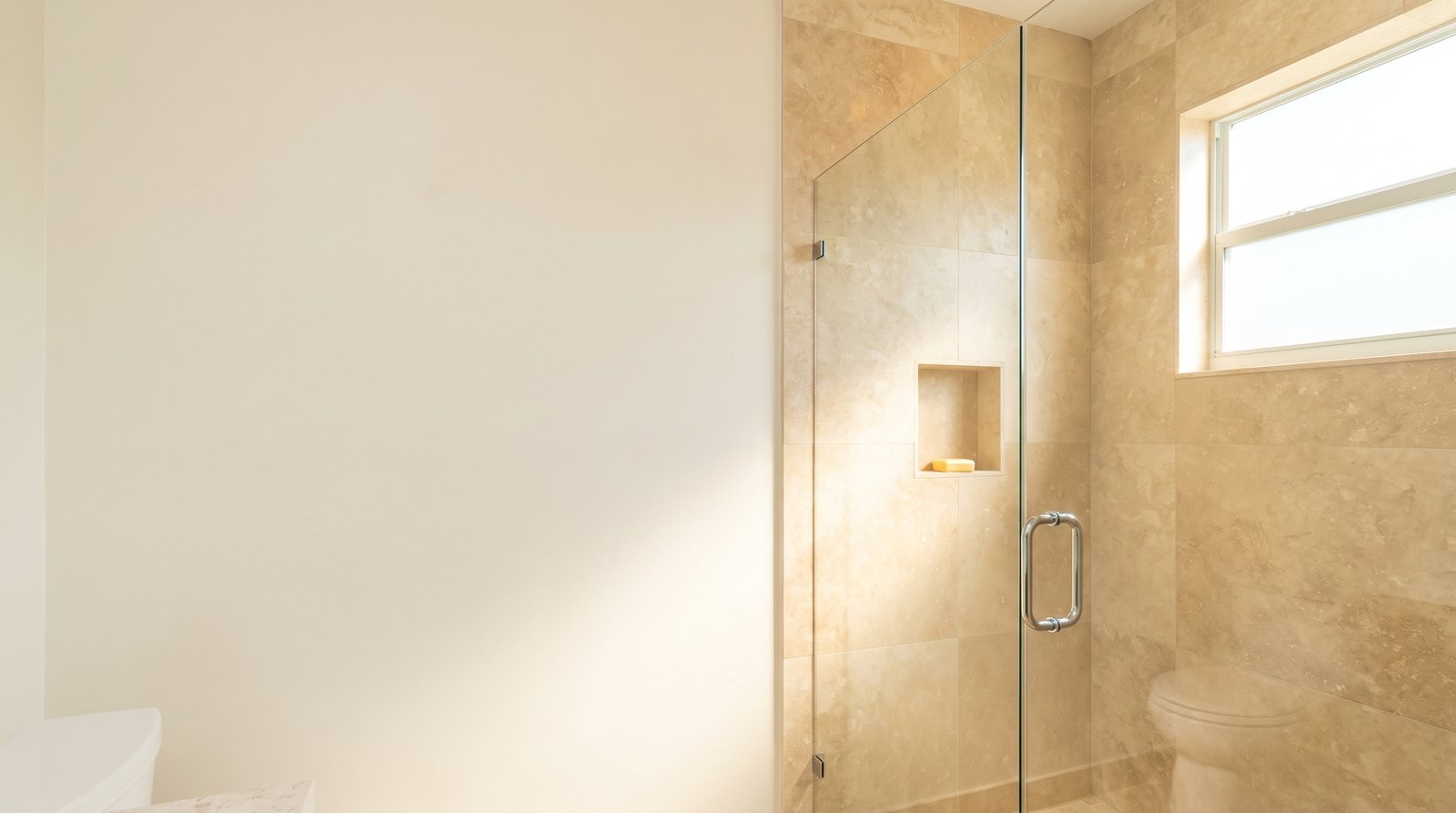
Common Bathroom Drywall Issues & Signs It Needs Professional Repair
Bathroom drywall faces moisture, plumbing repairs, and accidental damage. Standard drywall isn't rated for wet areas—repair often requires moisture-resistant materials.
- Water Damage from Leaks: Past plumbing leaks leave bubbled, sagging, or mold-spotted drywall that must be cut out.
- Plumbing Access Holes: Holes left after a plumber's repair need clean patches with proper finishing.
- Steam Damage on Ceilings: Without proper paint or ventilation, ceiling drywall peels and discolors.
- Holes from Removed Fixtures: Old towel bars, mirrors, and accessories leave anchor holes that need patching.
The Benefits of Professional Drywall Repair
In wet areas, the right material matters as much as the technique. We use moisture-resistant board and finishes built for humid bathrooms.
- Moisture-Resistant Materials: We use green-board or cement board where moisture is a concern.
- Mold Prevention: We treat moldy areas before patching to prevent return.
- Texture Matching: Knockdown, orange peel, smooth—your repair vanishes.
- Bathroom-Rated Paint: Final coat uses humidity-resistant paint.
Frequently Asked Questions
- Can you repair drywall around the bathtub?
- Yes. We replace water-damaged board with cement board or green-board, then finish to match the wall.
- Do you handle mold?
- We can address surface mold on small repairs. Large-scale mold needs licensed remediation—we'll refer you if so.
- How long does the repair take?
- Small patches: 1 visit. Larger water-damaged areas: 2–3 visits to allow drying time between coats.