
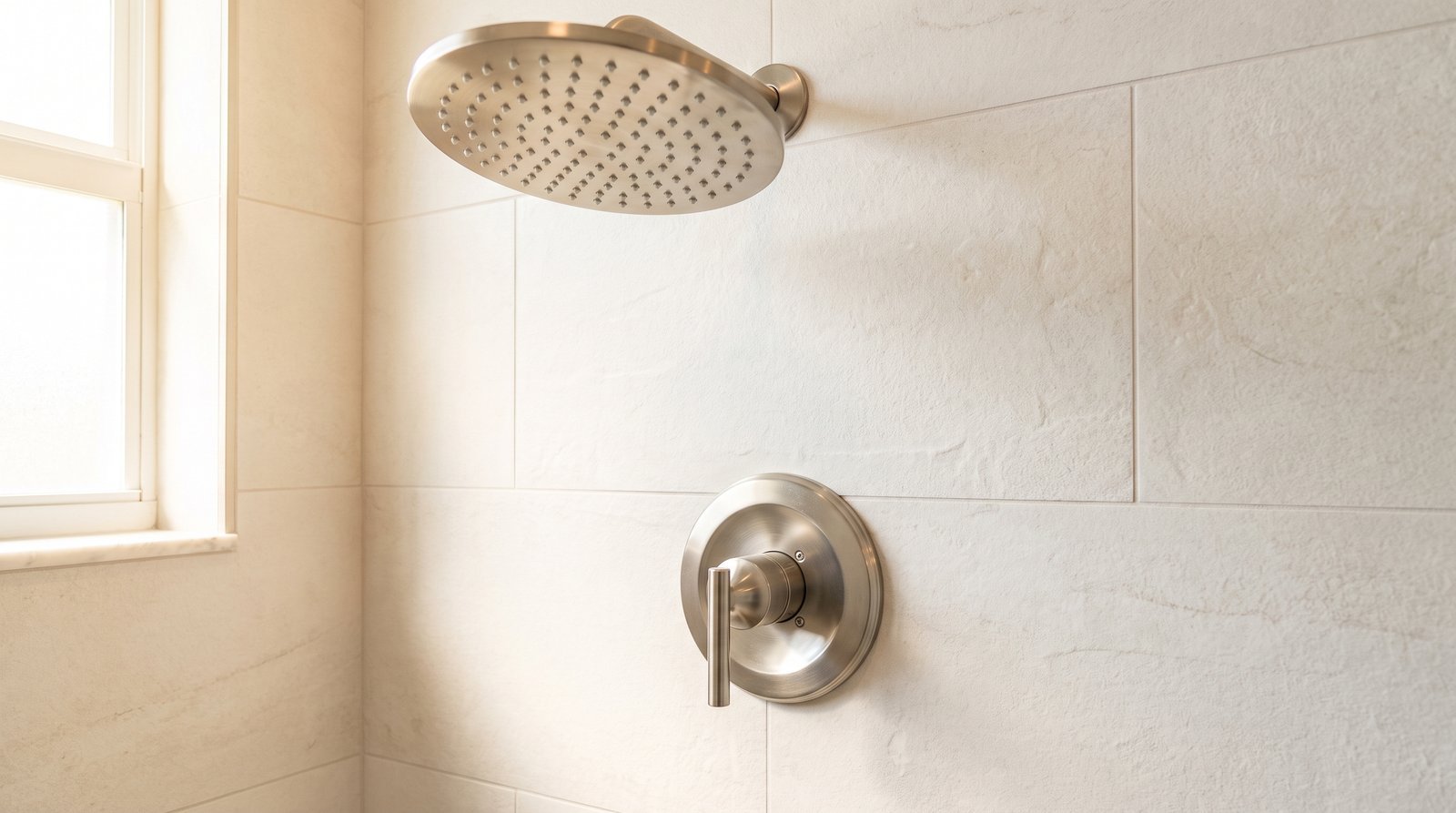
Common Shower Valve Issues & Signs You Need a Professional
The shower valve controls water temperature and flow. When it fails, you get scalding hot water, freezing cold water, or a slow leak inside the wall.
- Inconsistent Temperature: Water swings from hot to cold when the toilet flushes or the dishwasher runs.
- Leak Behind the Wall: Water stains on the ceiling below or constant water sound after shut-off.
- Drip from the Spout: Worn cartridge fails to fully shut off the water.
- Hard to Turn: Mineral buildup makes the handle stiff and difficult to operate.
The Benefits of Expert Shower Valve Repair & Replacement
We diagnose accurately and either rebuild the existing valve with new cartridges or replace it with a modern anti-scald valve.
- Cartridge Replacement: Often a same-day fix that restores smooth, leak-free operation.
- Anti-Scald Valve Upgrade: Modern thermostatic valves prevent dangerous temperature swings.
- Tile-Friendly Installation: We work through existing access panels when possible to avoid wall damage.
- Pressure Tested: Every valve is tested before we close up.
Frequently Asked Questions
- Will you have to break my shower tile?
- We try to work through the existing access panel or escutcheon plate. If we have to cut tile, we'll discuss it with you first.
- How long does the repair take?
- Most cartridge swaps are 1–2 hours. Full valve replacement can take 3–4 hours.
- Can you upgrade to a thermostatic valve?
- Yes. We highly recommend them—they prevent scalding when other water in the house is used.