
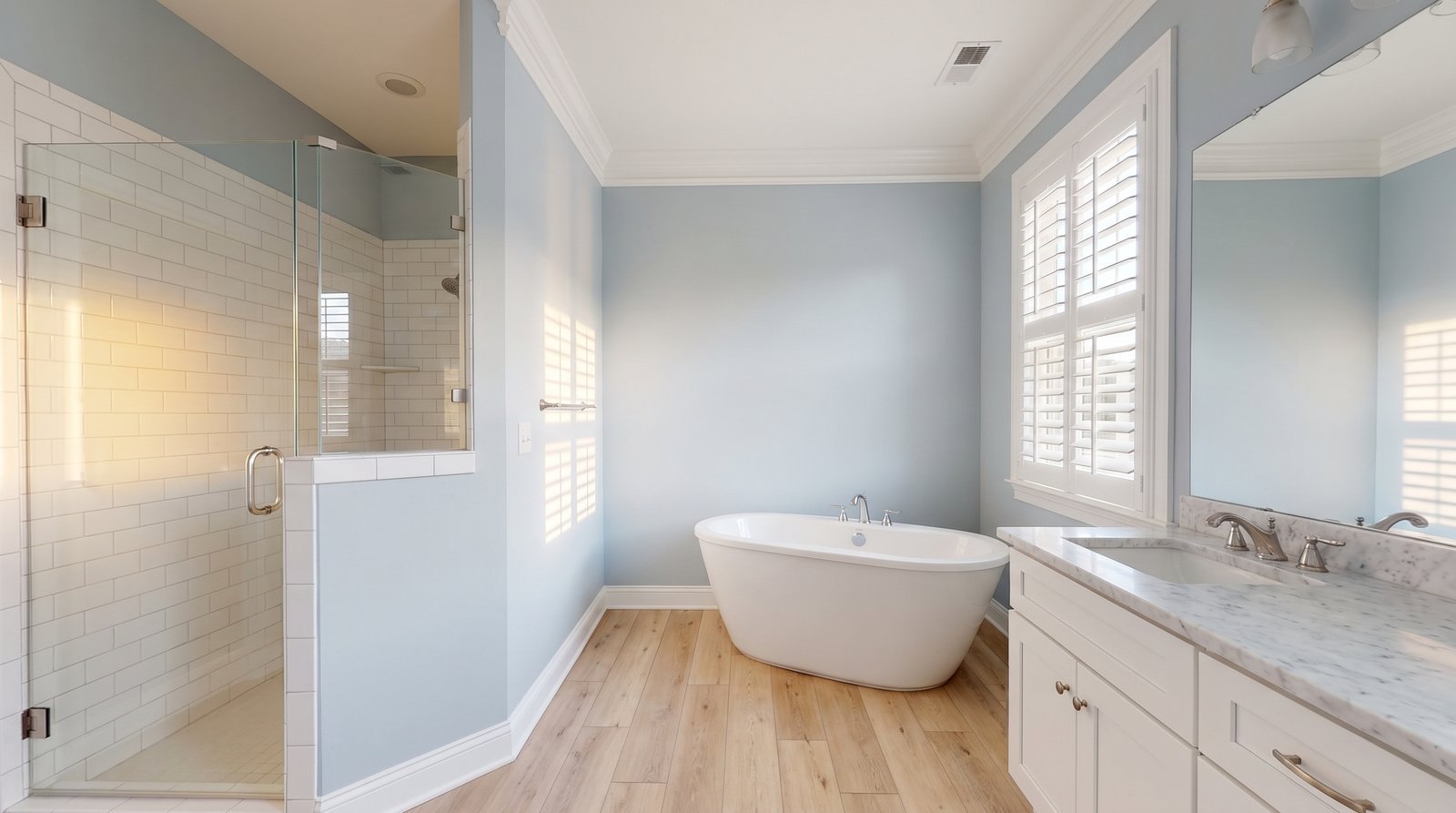
Common Bathroom Painting Issues & Signs It Needs a Professional
Bathrooms eat paint. Steam, splashes, and constant cleaning quickly degrade standard paint, leading to peeling, mildew, and discoloration.
- Peeling Paint Above the Shower: Standard paint can't handle constant steam—it bubbles and peels.
- Mildew Spots: Moisture trapped on poorly-prepped walls grows mildew under the paint.
- Stained Ceiling: Steam stains and water spots from past leaks need primer and bathroom-rated paint.
- Outdated Color: Pink, mauve, or beige from past decades dates the room instantly.
The Benefits of Professional Bathroom Painting
Bathroom paint isn't ordinary paint. We use mildew-resistant, scrubbable formulas designed for high-humidity rooms.
- Mildew-Resistant Paint: Bath-specific paint with antimicrobial additives prevents mildew growth.
- Proper Prep: We clean, prime, and address moisture issues before painting.
- Crisp Lines: Sharp edges around tile, trim, and fixtures.
- Low-Odor Formulas: Modern low-VOC paint lets you use the bathroom the next morning.
Frequently Asked Questions
- What kind of paint do you use in bathrooms?
- We use bathroom-specific formulas like Sherwin-Williams Emerald or Benjamin Moore Aura Bath & Spa—designed for humid environments.
- Can you paint over tile?
- Generally we don't recommend it. Tile paint chips quickly. Replacing or refinishing the tile is a better long-term investment.
- How long until I can shower?
- Wait at least 24 hours after the final coat before generating steam.