
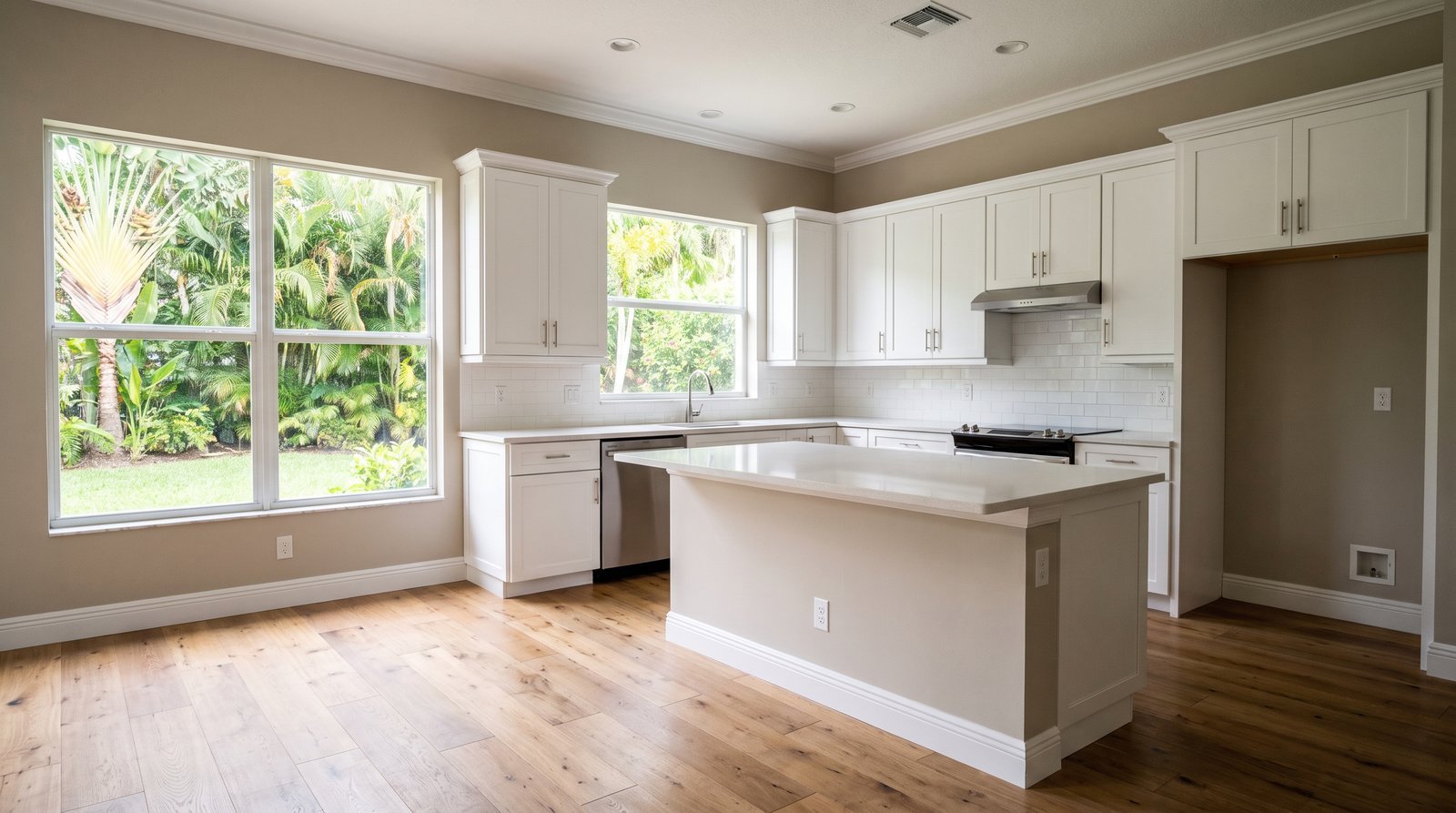
Common Kitchen Painting Issues & Signs It Needs a Professional
Kitchens are tough on paint. Steam, grease, splatter, and constant cleaning quickly degrade lower-quality finishes. A pro paint job stands up to it.
- Yellowed or Greasy Walls: Years of cooking residue dulls the color and makes the room feel dirty no matter how much you clean.
- Peeling Paint Near the Sink: Standard wall paint can't handle constant moisture—it bubbles and peels.
- Scuffed Cabinets: Painted cabinets that weren't properly prepped and sealed quickly chip around handles.
- Outdated Color: Beige and harvest gold from past decades immediately date the room.
The Benefits of Professional Kitchen Painting
A pro paint job in the kitchen needs the right paint, prep, and technique. We use kitchen-rated, scrubbable finishes that last.
- Grease-Resistant Finishes: We use semi-gloss or satin enamel that wipes clean and resists moisture.
- Meticulous Prep: We degrease, sand, and prime—the steps that make or break a kitchen paint job.
- Sharp Lines: Tape, cut-in, and steady hands give crisp edges on every cabinet and trim piece.
- Low-Odor Paint: Modern low-VOC paints let you use the kitchen the same evening.
Frequently Asked Questions
- Can you paint my kitchen cabinets?
- Yes. Cabinet painting requires extensive prep—removing doors, degreasing, sanding, priming, and spraying for a smooth finish. The result transforms the kitchen at a fraction of replacement cost.
- How long does it take?
- Walls and trim take 1–2 days. Full cabinet refinishing can take 4–7 days depending on cabinet count.
- What sheen do you recommend?
- Satin or semi-gloss for walls and trim—both clean easily without showing too much glare.